
What "3D printing services" actually covers
When people email us asking about 3D printing services, they usually mean one of two things: they want a single figurine made from a photo, or they're trying to figure out if we can produce something in bulk for an event, a team, or a shop. Both are the same underlying process on our end. A model gets built, a printer runs it layer by layer, and someone finishes it by hand before it ships. The differences are in scale and turnaround, not in the machinery.
Our standard offering is photo-to-figurine work: you send a photo, we sculpt a 3D model from it, you approve a preview by email, and then it goes to print. Sizes run from 4.8 inches up to 8.4 inches, and the size you pick changes more than the price. A 4.8 inch piece can hold a decent amount of facial detail but starts to lose fine texture on things like fabric folds or hair strands once you get past a certain print resolution. An 8.4 inch piece gives our painters more surface to work with, which shows in the final result if you look closely at the hands or the eyes.
Measurements people actually ask about
Height is the number everyone starts with, and it's the one we quote, but it's not the only thing that determines how a figurine reads on a shelf. Base diameter matters for stability, especially on a taller print or a pose with weight shifted to one leg. Our bases are sized to the figure rather than a fixed diameter across every order, so a pose with weight thrown to one side gets a wider foot than a standing portrait figure would.
Wall thickness is the measurement almost nobody asks about but that determines whether a piece survives shipping. Thin protruding details, an outstretched arm, a weapon, loose hair, get reinforced during the modeling stage even if that means deviating slightly from the reference photo. We'd rather thicken a sword an extra millimeter than have it snap in transit. If a customer specifically wants a thinner, more accurate detail on something fragile, we'll flag the tradeoff before printing, not after.
Weight is the last measurement worth mentioning, mostly because people are surprised by it. Larger prints don't get heavier in a straight line with height, because we hollow the interior of bigger pieces and add internal support ribs rather than printing a solid block. A hollow shell with the right rib pattern holds its shape under normal handling just as well as a solid one would, and it uses less material and prints faster besides. It's the same logic a lot of injection-molded toys use, just applied to a one-off print instead of a mold that gets reused thousands of times.
Sizes at a glance
- 4.8 inches, our most ordered size, good for a desk or a shelf without dominating it
- 5.8 inches, roughly the size of a large action figure, noticeably more detail retention
- 6.8 inches, the point where fabric texture and separate finger detail start to show clearly
- 8.4 inches, our largest size, built for pieces meant to be a centerpiece rather than one of several on a shelf
What we print with, and why it matters
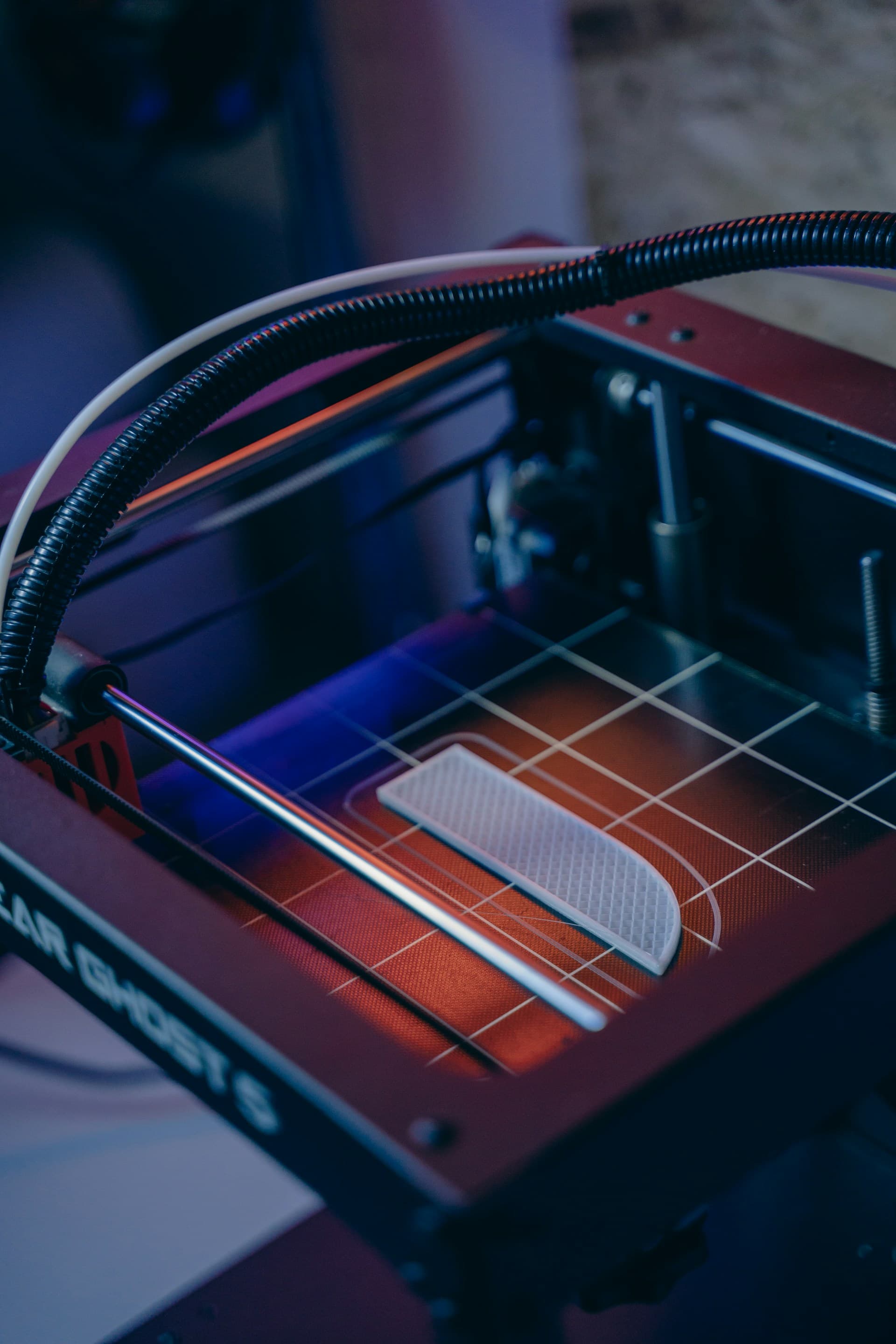
We work primarily with FDM printing for the structural print and finer resin work for pieces where facial and surface detail needs to be sharper than FDM layer lines allow. FDM builds a part by extruding heated filament through a nozzle, one line at a time, one layer at a time. Resin printing cures a liquid photopolymer with UV light through a screen mask, which is capable of dramatically finer layer heights and pixel resolution. We choose between them based on what the piece actually needs, not on which is cheaper to run.
Material safety comes up more than you'd expect, usually from parents ordering something for a kid's room or from customers who are just being careful. The filaments and resins we use come with manufacturer safety data sheets, and we don't use pigments or coatings that rely on heavy metals for color. Post-processing steps like sanding and resin curing happen in ventilated areas, because dust and uncured resin are the actual points where exposure risk exists, not the finished, fully cured piece sitting on your desk.
A finished, fully cured figurine is inert. The parts of this process that need real ventilation and protective equipment are sanding, and handling resin before it's cured. That's where our attention to safety is actually spent.
How an order actually moves through the shop
Nobody tells you how long a step takes when they first order, so here's the honest version. After you send a photo and order details, a real person looks at it before anything else happens, checking that the resolution and lighting are usable and flagging it if not. From there the model gets sculpted, which is the slowest single step, since it's done by hand rather than generated automatically from the photo. You get a preview by email once that's done, and nothing prints until you approve it.
Printing itself is comparatively fast. An FDM print in the 4.8 to 5.8 inch range typically finishes in under a day of machine time, and resin prints at the same scale are often quicker still, though they need a wash and cure cycle afterward that FDM prints skip entirely. Painting adds the most variable time of anything in the process, because a figure with a busy pattern, camouflage, a logo, fine jewelry, takes a painter meaningfully longer than a solid-colored outfit does. We'd rather tell you that upfront than promise a flat turnaround and miss it on a complicated piece.
Where our process differs from a print farm
A lot of 3D printing services are optimized for speed: upload a file, get a quote, receive a print. We do something closer to production art. Every order goes through a human review before modeling starts, a hand-sculpted pass to match your specific photo, an approval step where you can request changes, and a hand-painting stage after the print finishes. None of that is automated, and that's deliberate. A figurine that's supposed to look like a specific person doesn't tolerate the kind of shortcuts a generic print run can get away with.
If you're trying to figure out which size or finish makes sense for what you have in mind, our figurine options page walks through pricing and finishes in more detail, and you can see the full range of what we've made on the reviews page. For occasion-specific guidance, like sizing a gift for a wedding or an anniversary, we've also put together dedicated pages under shop by occasion.
Measurements and materials are the boring part of this business, honestly, but they're the part that determines whether a figurine looks right in five years or starts to look cheap after five months. We'd rather spend the extra sentence explaining wall thickness than have someone unhappy with a piece that didn't hold up.