
The problem supports are actually solving
Every print with an overhang, and almost every figurine has several, needs something holding up material that would otherwise sag or fail mid-print. An outstretched arm, hair falling away from the head, a cape, a chin tilted forward over the chest, all of these are geometry hanging in open space with nothing underneath until the support structure gives it something to rest on. Get the supports wrong and you either lose the print entirely or spend an hour with a hobby knife cleaning up scars that never should have been there.
For years the default answer was a grid, straight vertical posts arranged in rows under anything that needed help, contacting the model wherever the software decided a touchpoint was needed. It works. It's also blunt. A grid support doesn't care whether it's holding up a flat, forgiving section of a cloak or the bridge of a nose. It touches both the same way, and removing it leaves the same kind of mark on both.
What "organic" actually means here
Organic supports, sometimes called tree supports depending on which slicer you're using, replace that grid with branching structures that grow up from the build plate or from thicker parts of the model itself, narrowing as they go, splitting where they need to reach multiple points, and touching the surface at a single small tip instead of a flat post. PrusaSlicer added this as a named feature a few versions back, and Cura's tree support mode does something similar. The visual comparison is almost literal: instead of scaffolding, you get something closer to a branch reaching up to touch a leaf.
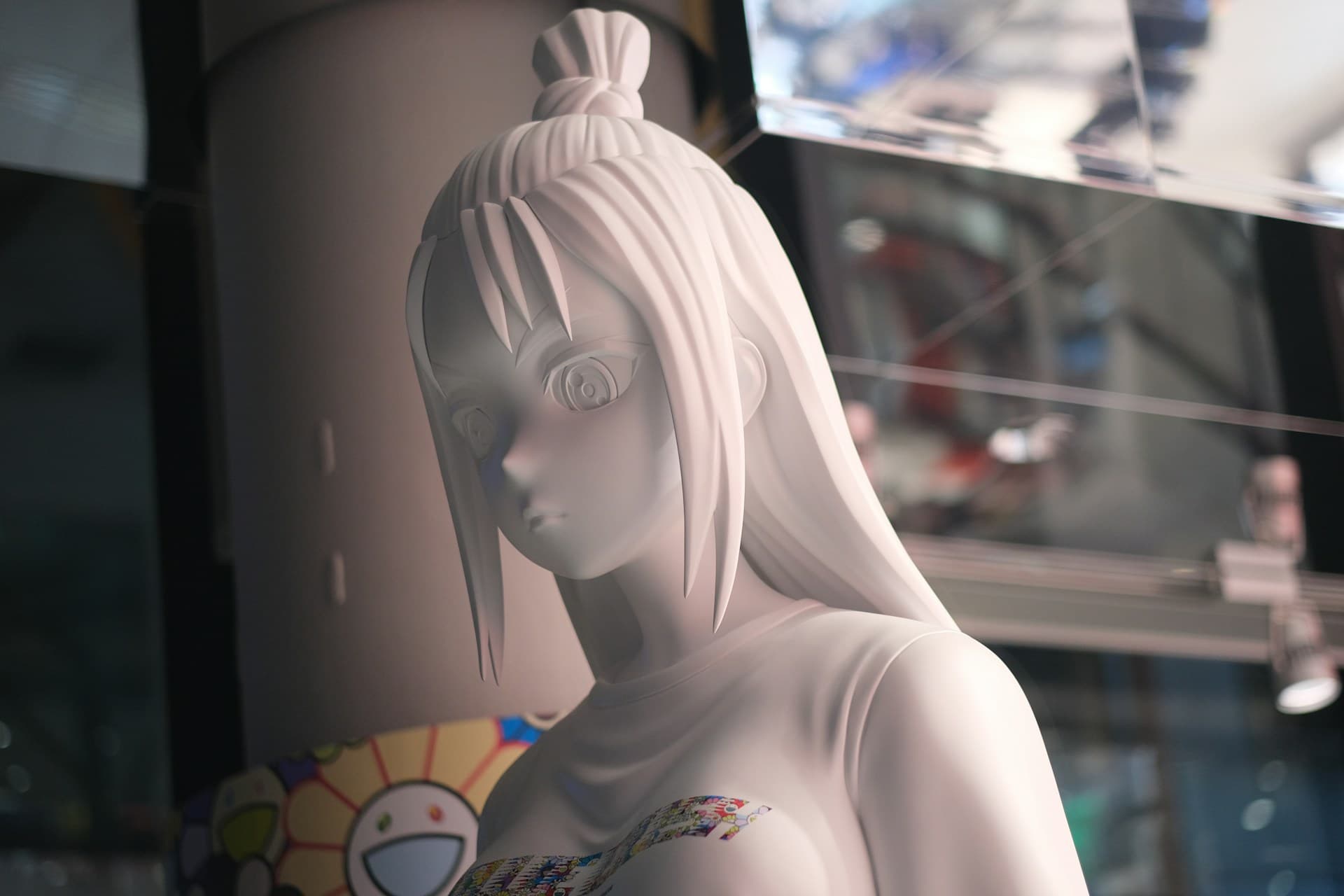
The practical upside is in exactly the places a grid struggles. A single tip touching a cheekbone leaves a pinpoint mark that a painter can sand out in seconds. A flat grid post touching the same spot leaves a wider scar that sometimes needs filler before paint will sit right over it. On a face, where a customer's eye goes first, that difference is the entire reason we care about which support style got used.
Where the material savings actually come from
- Fewer total touchpoints, since one branch can reach several nearby features instead of needing a separate post under each
- Thinner branch geometry compared to a full grid post, since the branch only needs to resist the load at its tip
- Less wasted plastic or resin overall, which on a resin print also means less to wash and cure after the fact
Where it matters more, FDM or resin
Both benefit, but not equally. On an FDM print, organic supports mostly save material and cleanup time, since FDM layer lines are already coarse enough that a support scar tends to blend into the surrounding texture once it's sanded. On a resin print, the stakes are higher. Resin captures detail at a scale where even a small support scar is visible under paint, especially a glossy or semi-gloss finish, which is most of what we use on faces and skin tone areas. Getting the support tree right on a resin print isn't a nice-to-have, it's the difference between a face that needs ten minutes of cleanup and one that needs an hour.
Orientation and support placement get decided together, not separately. A model oriented to minimize overhangs might need almost no supports at all, but that orientation sometimes isn't the one that gives the best surface quality on the parts people actually look at first. We generally accept a few more support points in exchange for orienting a face away from the layer lines that would otherwise run straight across it.
If you're printing your own, not ordering one
A fair number of people reading this run their own printer at home and are trying to decide whether it's worth switching support styles for a bust or a tabletop miniature they're working on. Our honest take: try it on something small first. Organic and tree supports occasionally fail differently than a grid does, usually by breaking mid-branch on a long unsupported reach rather than lifting cleanly off the plate, so a first attempt on a piece you don't mind losing is worth the twenty minutes. Slicer defaults for branch angle and tip diameter are usually conservative enough to work out of the box, but tightening the tip diameter down a fraction of a millimeter on face-heavy prints is the single adjustment that tends to matter most.
Pet figurines are a good example of where this pays off even for hobbyists. Ears, especially upright ones, and paws held slightly off the ground are almost always the failure point on a grid-supported print, and they're exactly the kind of small, awkward overhang that a branching support handles without needing a dozen posts crowded into a tiny area.
What this looks like from the customer side
You'll never see the support tree. By the time a figurine reaches you, it's been printed, the supports removed, the touchpoints sanded, primed, and painted over. But the support strategy chosen at the modeling stage is one of the quieter decisions that determines whether the finished piece looks clean or looks like it fought its way out of the printer. It's one of the reasons a hand-reviewed, artist-modeled figurine holds up to close inspection in a way a purely automated print-on-demand file usually doesn't.
If you're curious what that finished level of detail actually looks like once the supports are long gone, our reviews page has photos from real orders, and the figurine options page covers the sizes and finishes where this kind of surface detail matters most.